
Case Study: Unifying the Vision in Mixed-Use Developments


Mixed-use projects are the future of urbanism, but they present the industry's greatest commercial challenge: How do you sell a luxury apartment to a family seeking tranquility, while simultaneously selling the ground-floor retail space to a high-traffic restaurant? The answer isn't dividing your efforts; it's using technology to create a cohesive narrative that elevates the value of the entire project.
The Challenge of Multiple Audiences
For this case, we analyze the approach of an urban macro-project. The developer faced low conversion rates because their website mixed corporate and residential information, confusing both B2B investors and B2C buyers. Every audience felt the platform was not built for them — and they were right. The result was high bounce rates across both segments and a sales team that could not deliver a consistent pitch.
The Solution: A Segmented yet Integrated Ecosystem
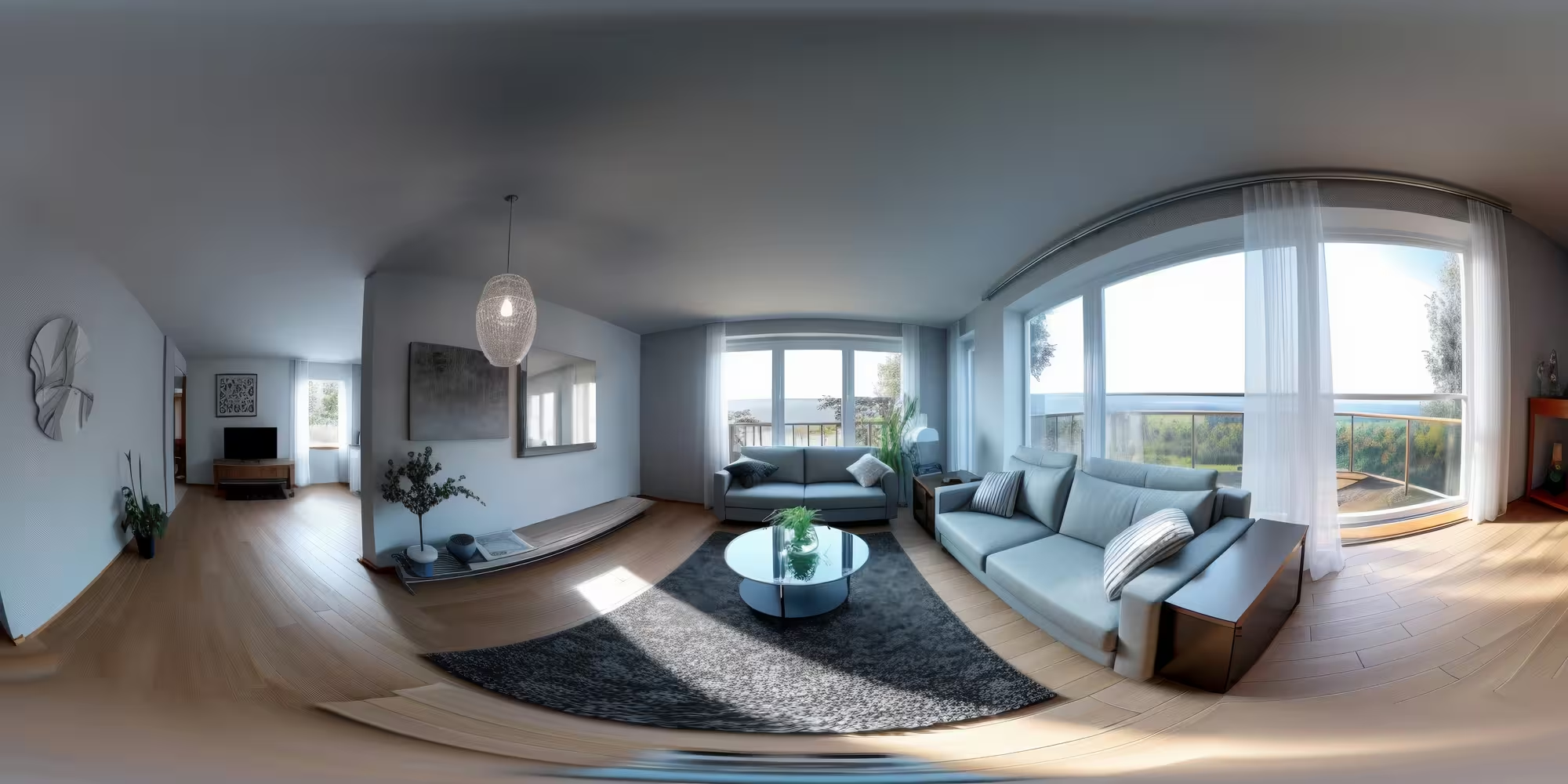
Through Owly's methodology, a digital infrastructure was implemented to bring order to the chaos. An intelligent UX central platform with adaptive navigation: if a user entered looking for offices, the interface and 360° tours prioritized connectivity, boardrooms, and commercial flow. If they were looking for housing, the focus instantly shifted to private amenities and family storytelling. Despite the visual segmentation, all data fed into a single CRM — allowing the developer to uncover cross-selling opportunities, such as business owners purchasing offices who ultimately invested in short-term rental apartments in the same tower.
"The complexity of a mixed-use project should not be transferred to the client. Technology is the only thing that can translate a complex master plan into a clear and secure investment decision."
— Pablo González, General Manager, Owly
The Impact
By treating the construction not as separate buildings but as an interconnected city, the developer managed to sell 85% of the commercial space in pre-sale, which skyrocketed property values and accelerated the sale of residential units in record time.
Conclusion
Visualization technology, backed by a robust data ecosystem, is the only thing that can translate a complex master plan into a clear and secure investment decision. The developers who master multi-audience strategy today will be the ones defining urban skylines tomorrow.
Share this article