
Sostenibilidad Estratégica: Cómo Visualizar el Impacto Ambiental de Todo el Proyecto

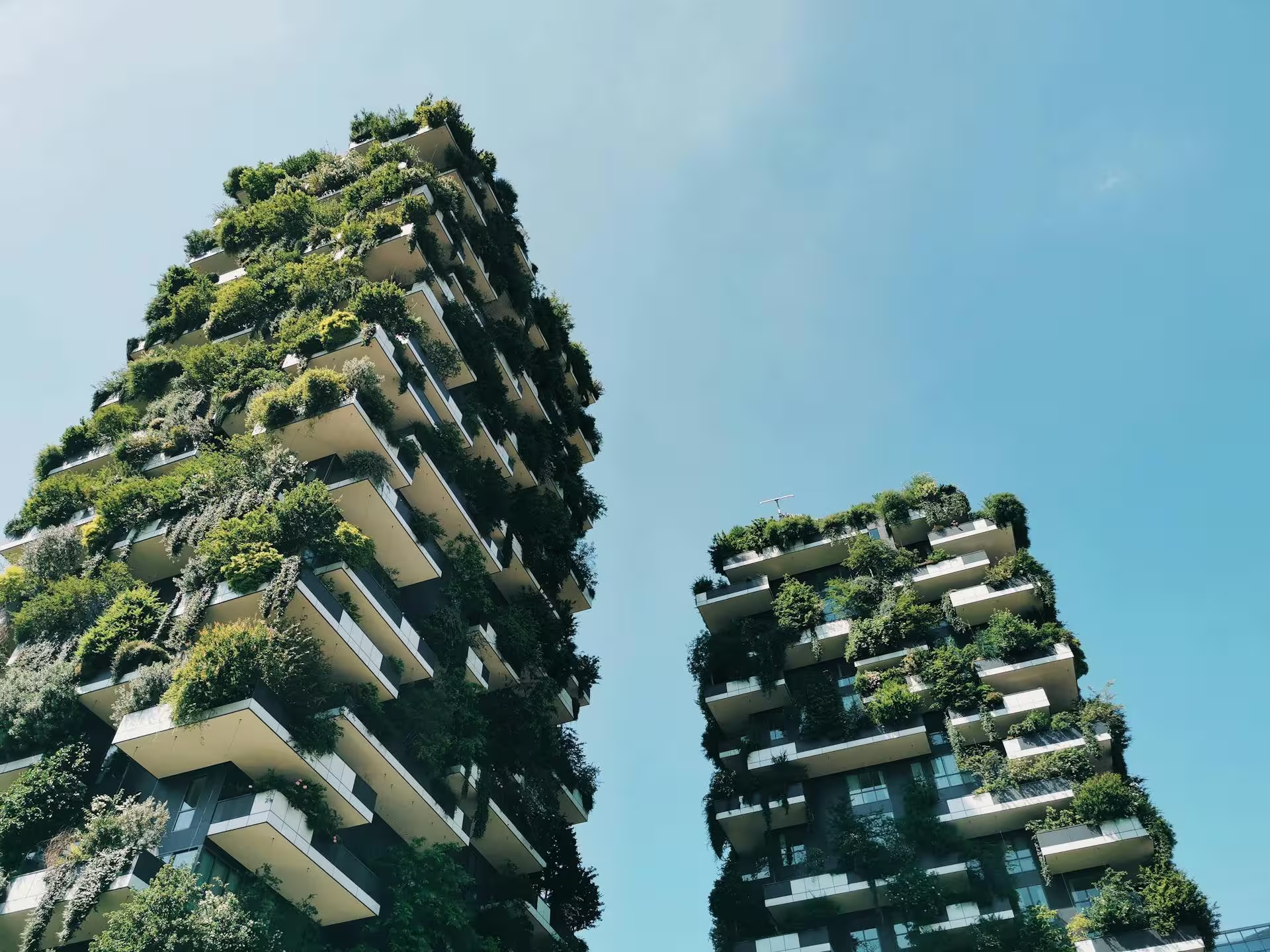
La sostenibilidad ha pasado de ser una tendencia de relaciones públicas a convertirse en un requisito estricto para los fondos de inversión y los compradores institucionales. Sin embargo, muchos desarrolladores no logran comunicar este valor y se limitan a mencionar "materiales ecológicos" en un párrafo perdido de su sitio web. Para que el diseño verde sea rentable, debe ser visible. El branding y la visualización deben trabajar juntos para demostrar cómo la sostenibilidad está integrada en los cimientos mismos de todo el proyecto.
Hacer Visible lo Invisible
Las características que le otorgan a un edificio certificaciones como LEED o EDGE a menudo permanecen ocultas dentro de los muros: aislamiento térmico, sistemas de recolección de agua, eficiencia energética. En lugar de renderizar únicamente las áreas sociales, utiliza modelos tridimensionales interactivos o videos esquemáticos que ilustren cómo el viento fluye a través de la arquitectura bioclimática para reducir el uso del aire acondicionado. Al visualizar el ahorro a largo plazo, el comprador comprende de inmediato el retorno de su inversión.
Identidad Visual Coherente con la Construcción
La identidad gráfica del proyecto debe reflejar los materiales reales que se utilizarán en la construcción física. Si la estructura emplea maderas certificadas u hormigón de bajas emisiones, la paleta de colores del sitio web, las texturas de la marca y la tipografía deben evocar esa misma honestidad y ligereza. Un branding sobrecargado o artificial entra en conflicto directo con una promesa arquitectónica sostenible.
"Vender sostenibilidad exige transparencia técnica y excelencia visual. Cuando el cliente ve la ingeniería verde detrás de los muros, no está comprando un espacio: está comprando un legado."
— Jenifer Grillo, Directora de Estrategia de Marca, Owly
Conclusión
Cuando logras que el cliente vea y comprenda la ingeniería verde detrás de los muros, no solo estás vendiendo un espacio físico: estás vendiendo innovación, eficiencia operativa y responsabilidad a largo plazo para todo el desarrollo.
Comparte este artículo